Here is the answer to the third DUI California felony question. Under AB 1546, which Gov. Gavin Newsom signed on Sept. 25, 2026, a third DUI within 10 years becomes a wobbler. Prosecutors can charge it as a misdemeanor (120 days to one year in county jail) or as a felony (16 months, 2 or 3 years). The new penalties are set to take effect Jan. 1, 2027.
Until then, a third DUI in California can only be charged as a misdemeanor. If you or someone close to you has been arrested, the change affects how the charge is filed, what the defense can argue, and how any future DUI would be treated. This article covers what the law says now, what AB 1546 changes, who decides whether the case is a felony, and which deadlines apply no matter which law governs your case.
The bill that was signed
AB 1546 was written by Assemblymember Nick Schultz (D-Burbank). According to the legislature's bill status page, the Governor approved it on Sept. 25, 2026, and the Secretary of State chaptered it the same day as Chapter 444, Statutes of 2026. The final floor vote, an Assembly concurrence vote on Aug. 31, 2026, was 79-0.
The bill was one of several DUI measures Newsom signed that day. The Governor's announcement also lists SB 907, known as "Braun's Law" (Sen. Bob Archuleta), AB 1685 (Assemblymember Lackey, driving privilege points) and AB 1687 (Lackey, license revocation). "Getting behind the wheel when you are impaired is inexcusable," Newsom said in the release. The Los Angeles Times reported that under AB 1546 a third DUI within 10 years "would be considered a wobbler," and quoted Schultz on the package: "These are completely preventable deaths."
When the new law takes effect
The enrolled text of AB 1546 gives no special start date for the section that makes a third DUI a wobbler (Section 4, which amends Vehicle Code 23546). Without one, the general rule in the California Constitution, Article IV, Section 8(c) applies: "a statute enacted at a regular session shall go into effect on January 1 next following a 90-day period from the date of enactment." The bill was enacted on Sept. 25, 2026, so the start date is Jan. 1, 2027.
The only later dates in the bill are in backup sections (Sections 4.2, 5.2 and 6.2). Each says, "This section shall become operative on January 1, 2031." Those sections apply only if a separate bill, AB 1830 (Petrie-Norris et al., "Ignition interlock devices"), is also enacted, both bills amend the same sections, and AB 1546 is enacted after it. On the legislature's status page, AB 1830's last action is dated Aug. 19, 2026 ("Read second time. Ordered to third reading."), and no approval or chapter number is listed. Those 2031 clauses do not delay the main third-DUI change.
The current rule for a third DUI
Under current Vehicle Code 23546(a), a DUI committed within 10 years of two separate prior convictions is punished by:
-
120 days to one year in county jail
-
A fine of $390 to $1,000
It can only be a misdemeanor. These prior convictions count toward the two:
-
DUI under Vehicle Code 23152
-
DUI causing injury under Vehicle Code 23153
-
"Wet reckless" (reckless driving under Vehicle Code 23103, as specified in 23103.5)
A reduced wet reckless plea from years ago can still count as a prior if it falls inside the 10-year window.
What AB 1546 changes
The Legislative Counsel's Digest says the bill would "instead, make the above DUI conviction punishable as a wobbler by imprisonment in the county jail for not less than 120 days nor more than one year and by a fine, as specified, or by imprisonment in the county jail for 16 months or 2 or 3 years and a fine, as specified."
The amended 23546(a) allows either of two sentences:
-
Felony: 16 months, 2 years or 3 years under Penal Code 1170(h), plus a $390 to $1,000 fine
-
Misdemeanor: 120 days to one year in county jail, plus a $390 to $1,000 fine
The fine range is the same for both.
Some parts of the third-offense section stay the same:
-
DMV revocation under Vehicle Code 13352(a)(5)
-
Surrendering your license to the court
-
A 3-year designation as a habitual traffic offender
What a wobbler is, and why "county jail" still means felony
A wobbler is a crime that can be punished as either a felony or a misdemeanor. The felony sentence for a third DUI would be served in county jail rather than state prison, because it runs under Penal Code 1170(h). Many people read "county jail" and assume the charge is a misdemeanor, but that is wrong. Under Penal Code 17(a), a crime punishable by county jail under 1170(h) is a felony. A felony conviction brings consequences that last well beyond the sentence.
Who decides: felony or misdemeanor
Penal Code 17(b) lists the ways a wobbler becomes a misdemeanor "for all purposes." Each one is a point where the defense can make its case:
-
The prosecutor's filing decision. If the prosecutor files the charge as a misdemeanor and the defendant does not object, it is a misdemeanor (17(b)(4)). This is the first decision, and defense counsel can sometimes push for it early.
-
The court, before trial. The judge can declare the offense a misdemeanor before trial (17(b)(5)).
-
The court, at or after probation. When granting probation, or later if the defendant applies, the court can declare it a misdemeanor (17(b)(3)).
-
The sentence itself. If the court imposes a non-felony sentence, the offense is a misdemeanor (17(b)(1)).
The law does not say how often each option succeeds. In a wobbler case, the defense usually asks the prosecutor or the court to treat it as a misdemeanor. The arguments are built on the facts of the stop, the details of the priors, and the person's circumstances. How strong those arguments are depends on the case, and a defense attorney in your county can tell you how local prosecutors and judges tend to handle these requests.
Why the label matters for any future case
Under Vehicle Code 23550.5, if a prior DUI was punished as a felony, any new DUI within 10 years can be charged as a felony. AB 1546 adds a prior felony DUI "punished as a felony under Section 23546, 23550, or this section" to that list. In practice, a third DUI punished as a felony would make any later DUI within 10 years chargeable as a felony. So the felony-or-misdemeanor outcome on a third DUI affects more than the current sentence. It also affects how any later DUI can be charged.
Fourth and fifth DUIs
Under current Vehicle Code 23550, a DUI within 10 years of three or more priors is already a wobbler. It is punishable under Penal Code 1170(h), or by 180 days to one year in county jail, plus a $390 to $1,000 fine. AB 1546 changes that as follows:
-
Fourth DUI (3 priors in 10 years): still a wobbler.
-
Fifth or later DUI (4 or more priors in 10 years): a straight felony, "punishable as a felony by imprisonment in the county jail for 16 months or 2 or 3 years and a fine," according to the bill's digest. The misdemeanor option is gone.
The bill also amends Vehicle Code 23572, the enhancement for having a child in the car. If a third DUI is punished as a misdemeanor under 23546 and a child under 14 was in the vehicle, the sentence includes an extra 30 days in county jail.
License revocation and ignition interlock
The enrolled AB 1546 digest lists no changes to license revocation or ignition interlock terms. Those rules come from other laws.
-
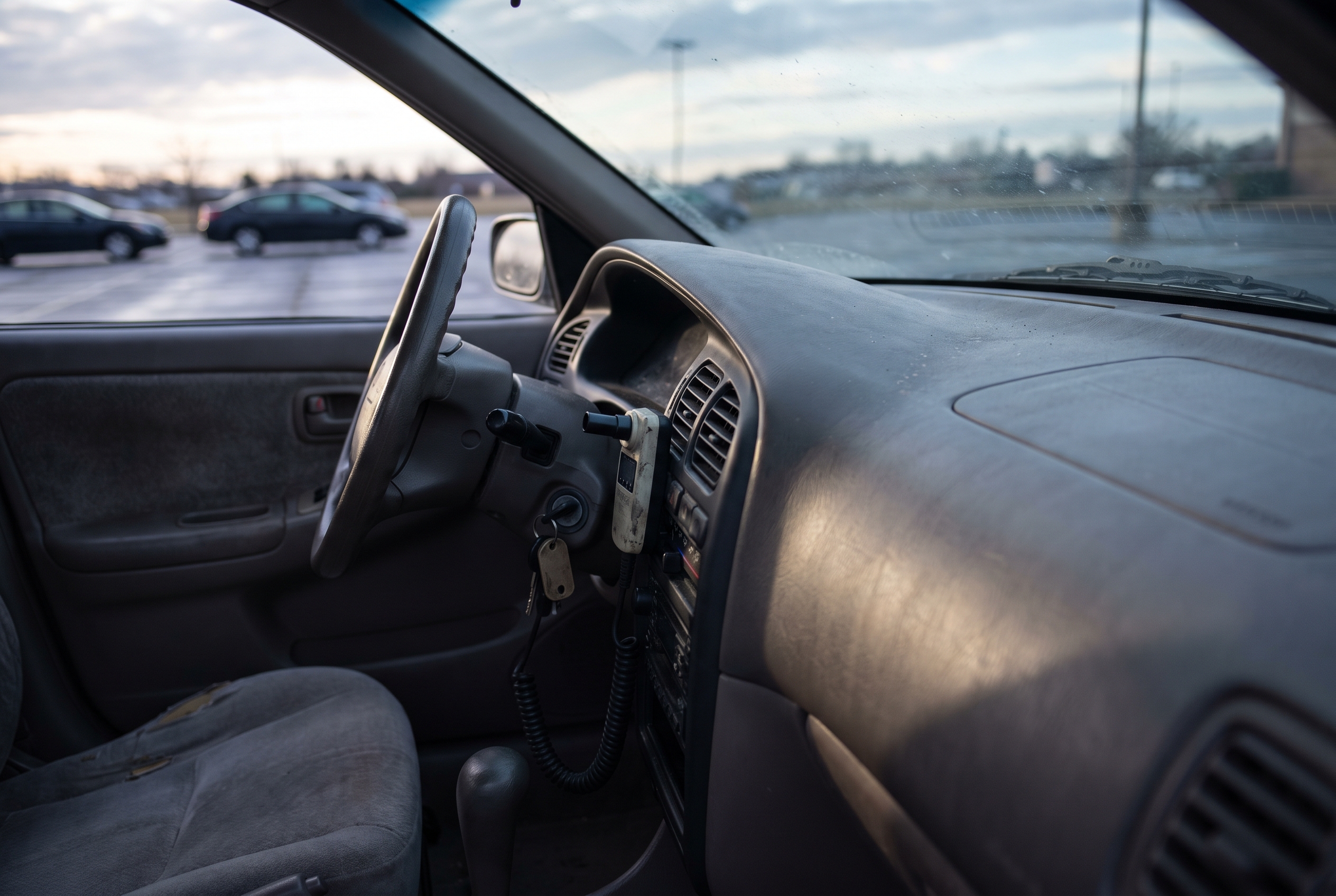
Current interlock law. Vehicle Code 23575.3 requires an ignition interlock device for a mandatory 24 months after a third-offense conviction under 23546 and 36 months after a fourth-offense conviction under 23550. The statute "shall remain in effect only until January 1, 2033" unless the legislature extends it. That is the interlock law's own expiration date, not a start date for AB 1546.
-
AB 1687 (Irene's Law). According to the enrolled digest, "commencing on January 1, 2031," the DMV must revoke the license of anyone convicted of DUI causing bodily injury who has 4 or more prior convictions within 10 years. The person cannot get the license back until 72 months after the revocation, and must agree to a 72-month ignition interlock term.
If you have been arrested for a third DUI
The DMV deadline comes first. The California DMV says: "You have the right to request a hearing from the DMV within 10 days of receipt of the suspension or revocation order." That deadline runs separately from the criminal case, and it applies whichever version of 23546 governs your charge. If you miss it, you can lose the chance to challenge the license action.
A test refusal has its own penalty. The DMV says refusing a chemical test on a third or later offense brings "a three-year revocation."
Ask about timing. The new wobbler penalties are set to begin Jan. 1, 2027. How the change applies depends on when the offense happened and when the case is charged or sentenced. That is a legal question to raise with your defense attorney early, before any plea discussions.
Collect your records. Whether a case counts as a third DUI depends on convictions within 10 years, including wet reckless pleas. Gather court and DMV records for every prior. Dates, charges and how each case ended all affect whether the priors count.
Know the next steps. After arraignment, the case moves through discovery, possible motions and plea negotiations. In a wobbler case, the felony-or-misdemeanor question can come up at filing, before trial and at sentencing.
Related reading
-
Pleading Down a California DUI Will Soon Come With a Murder Warning
-
Why Your Blood Alcohol Could Have Been Lower While You Were Driving
Sources
IMPORTANT NOTICE: GavelDaily.com is an advertising and information service, not a law firm. Submitting this form does not create an attorney-client relationship. The information you provide will be shared with licensed criminal defense attorneys in your area who may contact you about your inquiry. All submissions are treated as confidential by our service, but attorney-client privilege does not attach until you formally retain an attorney. Any attorney you connect with through this service is independently responsible for their legal advice and representation. Free consultations are subject to individual attorney availability. If you are facing an immediate legal emergency, contact your local public defender's office or call 911.
Note: This article contains AI-assisted content and has been reviewed by our editorial team.