
A Tulsa County deputy followed an SUV on Interstate 44 because it had California plates. Without a warrant, he pulled about a month of the vehicle's license-plate-reader history. A traffic stop and a dog sniff followed, and officers found about 91 pounds of methamphetamine. On Oct. 1, 2026, a federal judge threw all of it out. The tool that made that happen was a motion to suppress evidence, and anyone whose case depends on a search should understand how it works.
This explainer uses that ruling as a starting point. It then walks through the federal suppression process one step at a time: spotting the issue, meeting the deadline, the hearing, who has to prove what, and what happens after a win.
What happened in the Oklahoma plate-reader case?
The case is United States v. Kyle, No. 4:26-cr-00189-SEH, in the U.S. District Court for the Northern District of Oklahoma. U.S. District Judge Sara E. Hill granted the defense motion in an Opinion and Order filed as Document 62, according to the Sooner Sentinel and Law Commentary.
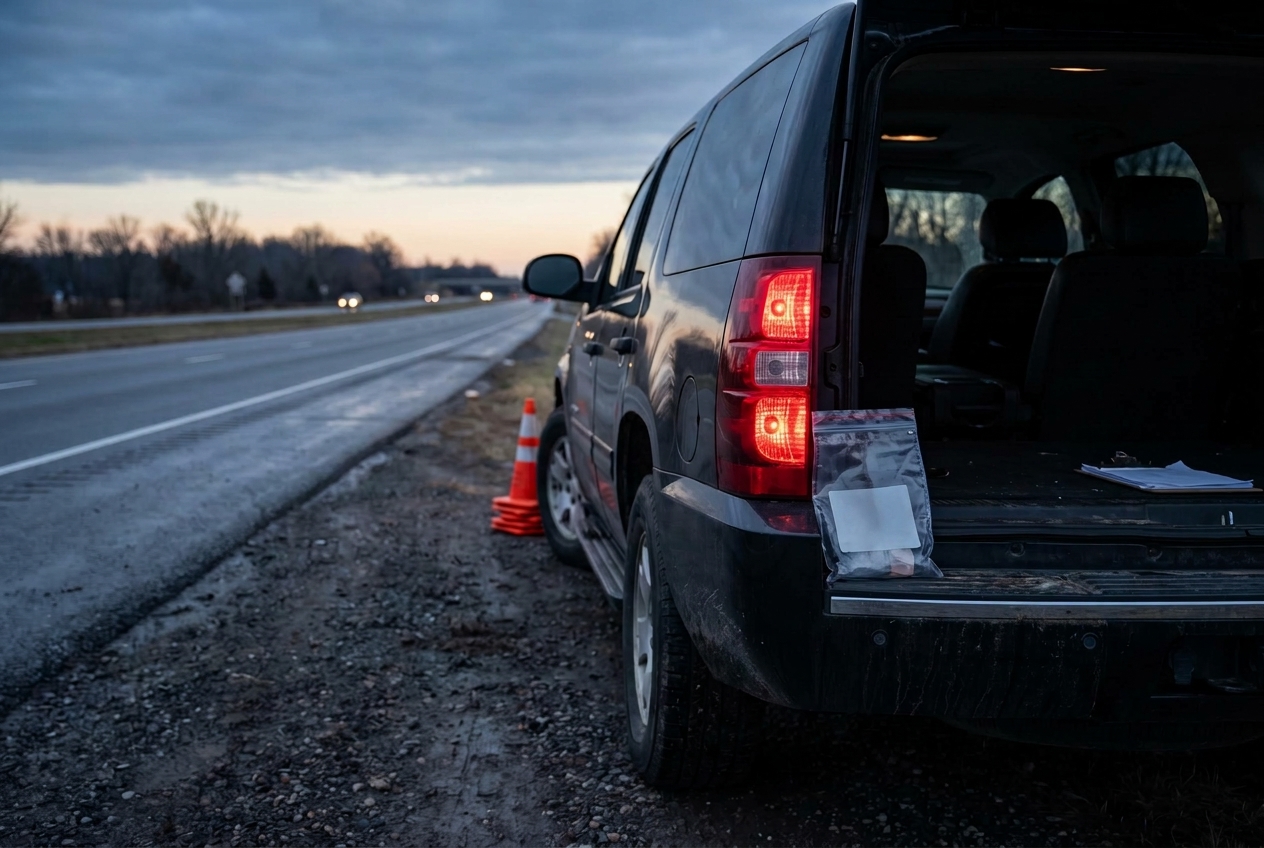
The defendant, Melisa Kyle, 46, of Crane, Missouri, faces one federal count of possessing methamphetamine with intent to distribute (Gizmodo; Law Commentary). The docket shows a federal complaint and initial appearance on May 12, 2026, appointment of Federal Public Defender Robert Scott Williams, and an indictment on May 19, 2026.
The officer was Tulsa County sheriff's deputy Freddie Alaniz, who also serves as a DEA task force officer (Law Commentary). The judge wrote that he followed Kyle's Mazda SUV "for no apparent reason other than the fact that it had a California license plate," as quoted by the Sooner Sentinel and Gizmodo.
Here is the sequence, as reported:
-
The database search. Without a warrant or probable cause, the deputy searched the Flock plate-reader network. Gizmodo and Military.com report he also used the VehicleManager system. The search returned more than 50 sightings across multiple states over roughly a month (404 Media; Law Commentary; Military.com). Law Commentary reports the history showed travel toward the California-Arizona border and back toward Missouri.
-
The stop. The deputy then saw driving he believed broke Oklahoma traffic law, including following another car at about 30 feet. That gave an objectively reasonable basis for a stop (Sooner Sentinel).
-
The refusal. After issuing a written warning, he asked to search the vehicle. Kyle said no. He called for backup, detained her, and told her a drug dog would sniff the vehicle (Sooner Sentinel).
-
The find. After the dog alerted, a warrantless search of luggage turned up about 91 pounds of methamphetamine, marijuana, and about $7,000 in cash (Law Commentary). Local outlet KTOK also reported the 50-plus sightings, the 91 pounds, and the suppression.
Why did the judge throw out the evidence?
The short answer: the judge found the warrantless plate-reader search violated the Fourth Amendment, and everything that flowed from it was tainted. She suppressed both the Flock records and the evidence from the vehicle search (404 Media; Law Commentary).
The opinion discussed two Supreme Court cases, Carpenter v. United States and United States v. Knotts. Knotts allowed real-time tracking of a car on public roads. Judge Hill distinguished it: a historical database holding a month of sightings lets police rebuild a person's travel patterns, which is a different thing (404 Media; Law Commentary).
"This is a type of indiscriminate mass surveillance," the judge wrote, according to the Sooner Sentinel. She also asked, "Why is it the government's business where everyone goes all the time?" And she wrote: "Freedom from persistent, dragnet-style surveillance while in public is not a foreign concept in our society, and it is a reasonable expectation that society already accepts," as quoted by the Daily Caller. "The Fourth Amendment requires courts to draw a line," she wrote (Law Commentary).
Gizmodo reports the drugs were suppressed as "fruit of the poisonous tree." In plain terms: if the first step police took was unlawful, evidence they found because of that step can be excluded too. The tree is the illegal search. The fruit is what it led to.
There was a second problem. Military.com reports the judge found the traffic stop itself was justified, but the continued detention was not, because the dog sniff happened after Kyle's license was returned and without reasonable suspicion. A lawful stop can become unlawful if police hold you longer than the reason for the stop allows.
What is a motion to suppress evidence?
A motion to suppress asks the judge to bar the prosecution from using specific evidence at trial because of how it was obtained. It does not argue that you are innocent. It argues that the government broke the rules getting the evidence. Common targets include:
-
A search done without a warrant and without a valid exception
-
A stop with no legal basis
-
A detention that lasted longer than the reason for the stop justified
-
A database or records search done without a warrant, as in Kyle
Step 1: How does the defense find out what to challenge?
You cannot challenge evidence you do not know about. Under Federal Rule of Criminal Procedure 12(b)(4)(B), at or soon after arraignment, the defendant may ask the government for notice of the evidence it intends to use at trial, so the defense has the chance to move to suppress it.
Your own memory matters here too. Your lawyer needs to know how the stop started, what the officer said, how long you were held, whether you refused consent, and any hint that the officer already knew where you had been.
Step 2: Is there a deadline to file a motion to suppress?
Yes, and missing it can cost you the argument. In federal court, Rule 12(b)(3)(C) says suppression "must be raised by pretrial motion if the basis for the motion is then reasonably available and the motion can be determined without a trial on the merits."
Rule 12(c)(1) says the court "may, at the arraignment or as soon afterward as practicable, set a deadline for the parties to make pretrial motions." If the court does not set one, "the deadline is the start of the trial." Under Rule 12(c)(2), the court can extend or reset the deadline before trial.
If the deadline passes, Rule 12(c)(3) says the motion is untimely, "But a court may consider the defense, objection, or request if the party shows good cause." Good cause is an exception, not a plan. Ask your lawyer early what the motion deadline is in your case. State courts have their own rules and deadlines, so the federal rule may not apply if you are charged in state court.
Step 3: What happens at a suppression hearing?
Under Rule 12(c)(1), the court may schedule a motion hearing. This is where the facts get tested. Officers can be called to testify, and records come in, such as body camera footage, dispatch logs, and in a case like Kyle, plate-reader search logs. Military.com reports that the deputy in Kyle logged his reason for the Flock search as "traffic violation" and "investigation."

Timing is protected. Rule 12(d) says: "The court must decide every pretrial motion before trial unless it finds good cause to defer a ruling. The court must not defer ruling on a pretrial motion if the deferral will adversely affect a party's right to appeal."
Step 4: Who has the burden of proof on a motion to suppress?
Both sides carry part of it. The defendant goes first: in Rakas v. Illinois, 439 U.S. 128, the Supreme Court said "The proponent of a motion to suppress has the burden of establishing that his own Fourth Amendment rights were violated by the challenged search or seizure." You generally cannot challenge a search of someone else's property or privacy.
When police acted without a warrant, the government has to justify what they did. The Tenth Circuit, which covers Oklahoma, said in United States v. Spence (2021): "The government bears the burden of proving the reasonableness of [an] officer's suspicion." On appeal, the trial judge's factual findings stand unless clearly erroneous, while the ultimate question of reasonableness is reviewed fresh (de novo). That is why the hearing record matters so much: the facts found there usually stick.
Step 5: What happens if the motion to suppress is granted?
The suppressed evidence cannot be used at trial. But the case does not automatically end, and the government may fight back.
Under 18 U.S.C. § 3731, the United States may appeal an order "suppressing or excluding evidence" made before jeopardy attaches, "if the United States attorney certifies to the district court that the appeal is not taken for purpose of delay and that the evidence is a substantial proof of a fact material in the proceeding." The appeal must be "taken within thirty days" of the order. In Kyle, that appeal would go to the Tenth Circuit.
Flock, which was not a party to the case, said in a statement quoted by the Daily Caller: "The ruling goes against the overwhelming weight of authority in similar cases across the country, including multiple recent decisions in Oklahoma, and we expect it will be appealed and ultimately overturned." As of Oct. 6, none of the coverage Gavel Daily reviewed reported a government appeal.
If there is no appeal, or the appeal fails, prosecutors decide whether they can go forward without the excluded evidence. When the suppressed evidence is the core of the charge, that decision can reshape plea talks or the whole case. No outcome on that question has been reported in Kyle.
Does one ruling mean plate-reader evidence will be thrown out in my case?
No. Military.com notes that the Kyle decision is a trial-court order, not binding precedent. Gizmodo reports that three other recent Oklahoma federal rulings, in cases named Schoggins, Brown, and Acosta, went the other way. Challenges to plate-reader searches are new, and results vary by court and by the facts. What Kyle shows is that the argument can win, and that it has to be raised on time.
What to tell your lawyer
-
Why you were pulled over, in your own words, and what the officer said the reason was
-
How long the stop lasted, and whether you were held after getting your license or a warning back
-
Whether you refused a search, and what happened after you did
-
Anything suggesting the officer already knew your travel history or ran a database check
-
Your next court date, so your lawyer can confirm the motion deadline
A motion to suppress is often the strongest move a defendant has when the case rests on a search. It works only if the issue is spotted early and filed before the deadline closes.
Related reading
-
Why Did Two Multimillion-Dollar Fraud Cases Draw Such Different Sentences?
-
Public Defender or Private Attorney for a Misdemeanor? How to Choose
Sources
-
Gizmodo: Judge Calls Flock Search 'Indiscriminate Mass Surveillance,' Throws Out Evidence
-
Military.com: Sheriff Deputy's Warrantless Tracking of Woman Via Flock Violated Fourth Amendment
-
Daily Caller: Federal Judge Rules Warrantless Flock Search Violated 4th Amendment Rights
-
KTOK: Oklahoma Federal Judge Limits Warrantless Flock Camera Tracking
This article contains AI-assisted content and has been reviewed by our editorial team.
IMPORTANT NOTICE: GavelDaily.com is an advertising and information service, not a law firm. Submitting this form does not create an attorney-client relationship. The information you provide will be shared with licensed criminal defense attorneys in your area who may contact you about your inquiry. All submissions are treated as confidential by our service, but attorney-client privilege does not attach until you formally retain an attorney. Any attorney you connect with through this service is independently responsible for their legal advice and representation. Free consultations are subject to individual attorney availability. If you are facing an immediate legal emergency, contact your local public defender's office or call 911.