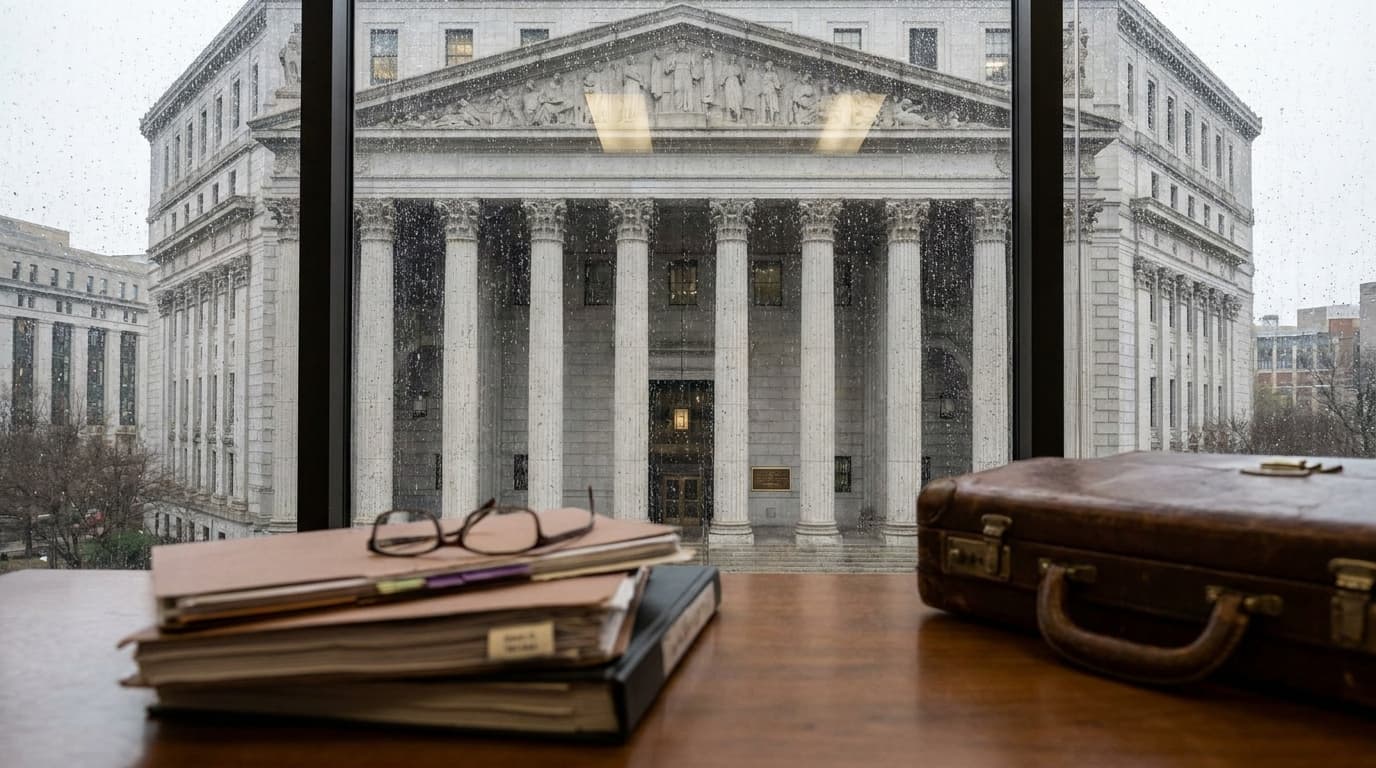
On May 22, 2026, U.S. District Judge Waverly Crenshaw of the Middle District of Tennessee did something federal defense lawyers almost never see: he dismissed an indictment before trial on vindictive-prosecution grounds. The defendant was Kilmar Abrego García. The charges were human-smuggling counts tied to a 2022 Tennessee traffic stop. The ruling is a working template for any federal defender facing a politically charged or retaliation-tinged prosecution in 2026.
Crenshaw stopped short of finding that prosecutors acted with actual malice. He did not have to. Instead, the court held that the defense had established a presumption of vindictiveness and that the Government failed to rebut it. As Crenshaw wrote, the objective evidence here shows that, absent Abrego's successful lawsuit challenging his removal to El Salvador, the Government would not have brought this prosecution, and the record sadly reflects an abuse of prosecuting power. The Department of Justice has announced it will appeal to the Sixth Circuit, calling the order wrong and dangerous (CBS News).
Why a Pre-Trial Vindictive-Prosecution Dismissal Is So Rare
The doctrine traces to Blackledge v. Perry (1974), which presumed vindictiveness when a prosecutor raised charges after a defendant exercised the right to appeal. The Supreme Court then sharply narrowed the doctrine in United States v. Goodwin, 457 U.S. 368 (1982), holding that the presumption does not ordinarily apply to pre-trial charging decisions. The reasoning: before trial, prosecutors are still assessing the case, weighing evidence, and exercising broad discretion. A change in charges, the Court said, is not inherently suspect.
The practical result has been four decades of dead-on-arrival defense motions. As the Michigan Law Review documented, courts treat the pre-trial presumption as nearly impossible to invoke (Michigan Law Review). Defense-bar analysts have made the same point about the political prosecutions of 2025 and 2026, warning that even strong fact patterns rarely survive the Goodwin standard at the trial level (Kropf Moseley Schmitt).
Crenshaw's order is doctrinally significant because the Sixth Circuit applies Goodwin strictly and seldom presumes pre-trial vindictiveness. Other circuits, including the 2d, 7th, 8th, 10th, and D.C. Circuits, accept a presumption based on a reasonable likelihood of vindictiveness, which is a more defendant-friendly standard (Wikipedia overview of the doctrine). Even in those circuits, district judges rarely reach the merits before trial.
The Four-Factor Evidentiary Path Crenshaw Relied On
The defense, led by Sean Hecker, built the record on four objective points the court found persuasive (The Hill):
-
A closed investigation. DHS opened a file on the November 2022 Tennessee traffic stop, then closed it before Abrego was deported. The closure showed the executive branch had already decided not to charge.
-
A reopening tied to protected litigation. Investigators reopened the file only after the U.S. Supreme Court ordered Abrego's return to the United States following his successful wrongful-removal claim (PBS NewsHour).
-
Main Justice fingerprints. Then-Deputy Attorney General Todd Blanche and other senior DOJ officials drove the reopened case, not the line U.S. Attorney's Office. The court treated that escalation as objective evidence of a non-routine charging decision.
-
Contemporaneous DOJ statements. Senior officials publicly linked the prosecution to Abrego's successful civil litigation, providing on-the-record material that doubled as admissions when the court weighed motive.
Lawfare's pre-ruling analysis predicted this would be the doctrinal frame, noting that Blanche's public statements about the case functioned as direct evidence that could support a presumption even in a circuit that ordinarily resists one (Lawfare).
Why the Government's Rebuttal Failed
Under the burden-shifting framework, once the defendant establishes a realistic likelihood of vindictiveness, the Government must produce objective, non-retaliatory justifications by a preponderance of the evidence (Suffolk University Law treatise). Prosecutors needed to explain why a closed investigation was reopened, why senior DOJ officials took the file, and why the timing tracked the civil ruling rather than any new evidentiary development.
The court found those explanations missing. The order does not declare that prosecutors lied. It says the Government did not produce a clean, contemporaneous, non-retaliatory record sufficient to overcome the inference the timeline and personnel choices created. That is the practical lesson: defenders do not have to prove malice. They have to build a record that forces the Government to do the explaining.
Motion-Practice Template for Federal Defenders
The Crenshaw order maps to a replicable workflow:
-
File under Rule 12(b)(3)(A)(iv). Vindictive-prosecution claims must be raised by pre-trial motion. Failure to file before the deadline waives the defense.
-
Document the pre-litigation posture. If charges were declined, dropped, or never pursued before a protected act, that posture is the single most powerful objective fact a defender can put before the court.
-
Subpoena the charging memo and Main Justice communications. Where the line office is no longer the decisionmaker, the chain of custody for the charging decision becomes the heart of the record.
-
Treat public DOJ statements as admissions. Press releases, on-camera comments, and social-media posts by senior officials are fair game and often substitute for testimony prosecutors will not give.
-
Preserve for appeal. Findings of fact get clear-error review; the legal framework gets de novo review. Build the factual record assuming the appellate court will not allow it to be supplemented later.
Practitioners should also be realistic about ethical limits. Courts will not order depositions of line prosecutors absent extraordinary cause. The path runs through documents, timelines, and public statements, not testimony from charging attorneys.
How Abrego García Compares to Comey, James, and Bolton
The political-prosecution wave of 2025 and 2026 has produced several vindictive-prosecution records, but only one has reached a merits ruling. On November 24, 2025, the indictments of former FBI Director James Comey and New York Attorney General Letitia James were dismissed in the Eastern District of Virginia. Those dismissals turned on Appointments Clause grounds tied to the improper appointment of U.S. Attorney Lindsey Halligan under 28 U.S.C. § 546, not on vindictive prosecution (NBC News). Both defendants had pending vindictive-prosecution motions; neither was reached (Wikipedia: Prosecution of James Comey; Wikipedia: Prosecution of Letitia James).
That leaves Abrego García as the cleanest 2026 template for the doctrine. Future motions can cite Crenshaw's evidentiary path directly without having to argue around an Appointments Clause off-ramp.
The Sixth Circuit Appeal
DOJ's appeal will be heard by the Sixth Circuit. On review, factual findings get clear-error deference, and the legal framework, including the application of Goodwin, gets de novo review. An affirmance would entrench the four-factor template across a circuit that historically resists pre-trial dismissals. A reversal would not undo what Crenshaw demonstrated procedurally: that a federal district judge can grant a Rule 12(b) motion on vindictive-prosecution grounds when the record is built right.
Practitioner Checklist
-
Identify any prior decision not to charge and document who made it and when.
-
Map the timeline of every protected act (lawsuit, public criticism, appeal, civil-rights complaint) against the charging timeline.
-
Subpoena charging memoranda, declination memos, and Main Justice correspondence.
-
Catalog every public statement by senior DOJ officials referencing the defendant or the underlying civil matter.
-
File the Rule 12(b) motion early and request an evidentiary hearing.
-
Preserve all factual findings on the record; assume appellate review.
-
Brief the burden-shifting standard explicitly so the trial court allocates the burden correctly.
What to Watch in 2026
Federal prosecutorial discretion remains broad, and courts continue to defer to charging decisions in the ordinary case (Congressional Research Service overview). The Abrego García ruling does not change that baseline. It marks an extreme set of facts in which the baseline broke. Defenders should expect more, not fewer, motions like this through 2026 as additional politically charged prosecutions enter the discovery phase. The Sixth Circuit ruling will set the ceiling for how far the Crenshaw template can travel.
Related reading
Sources
-
CBS News: Judge tosses federal charges against Kilmar Abrego Garcia
-
The Hill: Kilmar Abrego Garcia criminal case dropped, citing vindictive prosecution
-
PBS NewsHour: Federal judge dismisses human smuggling charges
-
Michigan Law Review: Prosecutorial Vindictiveness After Goodwin
-
Lawfare: The Comey Indictment and Selective or Vindictive Prosecution
-
Kropf Moseley Schmitt: Selective/Vindictive Prosecution Defenses
-
Suffolk University Law: Vindictive or Selective Prosecution treatise chapter
-
Congressional Research Service: Federal Prosecutorial Discretion
-
NBC News: Comey and James cases dismissed on Appointments Clause grounds
Note: This article contains AI-assisted content and has been reviewed by our editorial team.
IMPORTANT NOTICE: GavelDaily.com is an advertising and information service, not a law firm. Submitting this form does not create an attorney-client relationship. The information you provide will be shared with licensed criminal defense attorneys in your area who may contact you about your inquiry. All submissions are treated as confidential by our service, but attorney-client privilege does not attach until you formally retain an attorney. Any attorney you connect with through this service is independently responsible for their legal advice and representation. Free consultations are subject to individual attorney availability. If you are facing an immediate legal emergency, contact your local public defender's office or call 911.