
The federal appeal timeline after conviction runs about 11 months from notice of appeal to decision for criminal cases nationally, per Administrative Office Table B-4A for the year ending September 30, 2025. The binding deadline comes first: 14 days to file the notice. Briefing, argument and rehearing follow over the months after.
That single median hides the thing that matters most to a defendant. The deadlines that can destroy an appeal are short and clustered in the first two weeks. The months that dominate the calendar are transcript preparation, briefing extensions and queue time, none of which you control. Understanding which is which is the difference between an appeal that gets heard and one that gets dismissed before a judge reads a word of it.
The clock in one real case
On September 10, 2026, lawyers for Sam Bankman-Fried filed a petition for a writ of certiorari asking the Supreme Court to overturn his seven count fraud conviction and roughly $11 billion forfeiture. The question presented asks when a trial court may admit evidence about whether victims suffered actual losses in a fraudulent inducement prosecution, according to The Block.
The jury returned its verdict on November 2, 2023. Count the calendar:
-
November 2, 2023: guilty verdict on seven counts.
-
March 2024: sentencing, 25 years, and the roughly $11 billion forfeiture order.
-
April 2024: notice of appeal filed, reflected in Second Circuit docket No. 24-961-cr.
-
November 4, 2025: oral argument, about 19 months after the notice of appeal.
-
June 12, 2026: the Second Circuit affirms in a unanimous panel opinion by Circuit Judge Barrington D. Parker, sitting with Judges Eunice Lee and Maria Araujo Kahn (Crowdfund Insider, New York Daily Record case digest).
-
September 10, 2026: certiorari petition filed, exactly 90 days after the judgment.
Nearly three years from verdict to the courthouse steps of the Supreme Court. This case is an outlier in resources, record size and press attention. It is completely ordinary in its sequence. Every federal fraud appeal moves through the same gates in the same order.
Stage 1: the 14 days that decide everything
Under Federal Rule of Appellate Procedure 4(b), a defendant's notice of appeal is due within 14 days after the entry of judgment, or within 14 days after the order disposing of the last timely post-trial motion under Rules 29, 33 or 34, whichever is later. Those post-trial motions toll the clock. Nothing else does.

The notice of appeal itself is a short filing. It does not argue anything. It preserves everything. If it is late, the appeal can be gone regardless of how strong the underlying issues are. Rule 4(b)(4) lets the district court extend the deadline by up to 30 additional days for excusable neglect or good cause, which is a safety valve, not a plan.
This is also the point where appellate representation gets sorted out. Appointed trial counsel may continue, or the court may appoint new appellate counsel. If you retained a trial lawyer, ask directly whether that lawyer handles appeals, because trial skill and appellate skill are different trades.
One question comes before all of this: did you waive the right to appeal? The overwhelming majority of federal cases never reach a jury. The U.S. Sentencing Commission received documentation on 66,662 individual felony and Class A misdemeanor cases sentenced in fiscal year 2025, and Sourcebook Table 12 shows 65,099 of them, 97.7 percent, resolved by guilty plea. For fraud, theft and embezzlement cases specifically, 4,894 of 5,080, or 96.3 percent, were pleas. Plea agreements routinely contain appeal waivers. Read yours before you plan an appeal.
Stage 2: where you wait
Filing an appeal does not pause your sentence. To stay out of custody while the appeal runs, 18 U.S.C. 3143(b) requires a defendant to show by clear and convincing evidence that they are not likely to flee and pose no danger, and also that the appeal is not for purposes of delay and raises a substantial question of law or fact likely to result in reversal, a new trial, a sentence with no prison term, or a reduced sentence shorter than the expected duration of the appeal.
That is a demanding standard, and most convicted defendants serve while they appeal. Restitution and forfeiture obligations generally continue running too, absent a stay. This is why the calendar is not an abstraction. Eleven months of appellate median time is eleven months of a sentence being served.
Stage 3: the silent months before briefing
Here is the timing point almost nobody explains to defendants. The briefing schedule in FRAP 31 gives the appellant 40 days to serve and file the opening brief, the government 30 days to respond, and the appellant 21 days to reply, with the reply due at least 7 days before argument. Add it up and briefing looks like a three month exercise.
But that 40 day clock does not start at the notice of appeal. It starts when the record is filed. Before that happens, someone has to order the transcripts and a court reporter has to produce them. In a multi week fraud trial, that is thousands of pages. Transcript preparation quietly sets the pace of the entire appeal, and extensions of briefing time are routine rather than exceptional. They are the single biggest reason appeals stretch past a year.
The national numbers bear this out. For criminal appeals terminated on the merits in the year ending September 30, 2025, the median interval from notice of appeal to the filing of the appellee's last brief was 6.9 months, per Table B-4A. Getting to the end of briefing consumes most of the calendar.
Stage 4: what the appeals court is actually deciding
An appeal is not a second trial. There is no new evidence and no new witnesses. The panel reviews what happened below through standards of review that heavily favor the judgment:
-
De novo for pure questions of law, the most favorable standard available to a defendant.
-
Abuse of discretion for most evidentiary rulings, which is a high wall.
-
Plain error for issues that were not preserved by objection at trial, which is higher still.
-
Harmless error, the quiet killer. A court can agree the trial judge got something wrong and affirm anyway, because the error would not have changed the outcome.
The FTX appeal shows how a legal shift upstream can flatten an argument. In Kousisis v. United States, No. 23-909, argued December 9, 2024 and decided May 22, 2025, the Supreme Court held in an opinion by Justice Barrett, unanimous in the judgment, that a defendant who induces a transaction through materially false pretenses can be convicted of federal fraud even without intent to cause economic loss. That is the reason a "the customers were eventually made whole" theory failed. The Second Circuit also treated temporary misappropriation as complete fraud regardless of any intent to repay, and rejected the forfeiture challenge and the advice of counsel argument (Citation Needed).
Ask your appellate lawyer one specific question: which issues were preserved at trial? The answer determines the standard of review, and the standard of review determines your odds far more than the raw merits do.
Stage 5: argument, or a decision on the briefs
Most federal criminal appeals are never argued. Of the 6,962 criminal appeals terminated on the merits nationally in fiscal year 2025, Table B-4A shows 5,546 were submitted on the briefs and 1,416 went to oral argument, roughly one in five. Drawing argument is itself a signal that at least one judge finds the case worth talking through.
The intervals diverge sharply from there. Median time from the last brief to argument or submission was 3.8 months. From submission on the briefs to decision, the median was 0.5 months, often a short summary order. From oral argument to decision, 2.5 months. Argument buys you a hearing and costs you time.
Bankman-Fried's argument came on November 4, 2025, about 19 months after the notice of appeal, and the panel ruled roughly seven months later. Both intervals sit well above the national medians, which is what a massive trial record and a headline docket do to a schedule.
Stage 6: the decision and the mandate
Affirmance is the normal outcome. Table B-5 for the year ending September 30, 2025 records 9,917 criminal appeals terminated, of which 6,962 were decided on the merits. Of those merits decisions, 5,056 were affirmed or enforced, about 73 percent. 1,269 were dismissed. 521 were reversed and 104 remanded. The official reversal rate for criminal appeals was 7.48 percent. In the Second Circuit, where the FTX appeal was heard, criminal reversals ran 4.31 percent, with 377 of 487 merits decisions affirmed.
Those numbers are not a reason to skip an appeal. They are a reason to have realistic expectations and to focus on the strongest preserved issue rather than the longest list of complaints.
When the panel rules, the decision is not immediately operative in the district court. The mandate is the formal order returning jurisdiction below, and it issues after the rehearing window closes or after any rehearing petition is resolved. Only then does the district court act on a remand, a resentencing or any other instruction the panel gave.
Stage 7: rehearing and en banc
FRAP 40 sets 14 days after entry of judgment for a petition for panel rehearing or rehearing en banc, extended to 45 days when the United States is a party. That longer window applies in every federal criminal appeal, because the government always is.
The rule states plainly that en banc rehearing "is not favored." It ordinarily requires a conflict with a decision of the Supreme Court, of the same circuit, or of a sister circuit, or a question of exceptional importance. Petitions are filed often and granted rarely.
There is a strategic wrinkle worth understanding. A timely rehearing petition restarts the Supreme Court's certiorari clock, which can be useful for a defendant who needs time. It also delays finality and almost never succeeds. No rehearing petition was reported in the Bankman-Fried appeal, which is why the 90 day cert window ran straight from June 12 to September 10.
Stage 8: the Supreme Court
Under Supreme Court Rule 13, a certiorari petition is due within 90 days of entry of the court of appeals judgment, not from issuance of the mandate. A single Justice may grant an extension of up to 60 days on application. Rule 15 gives the opposing party 30 days to file a brief in opposition, after which the case is distributed for conference. Four Justices must vote to grant.
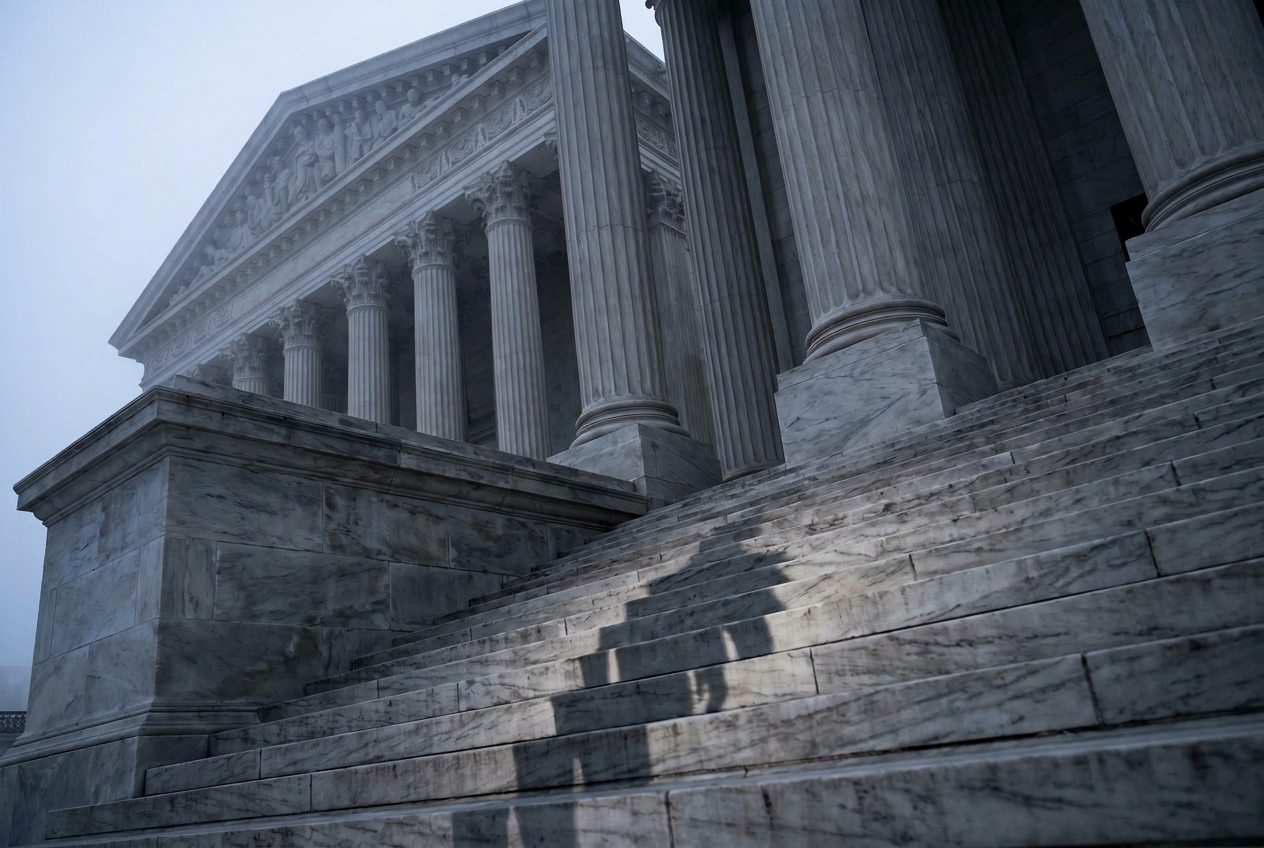
Rule 10 lists what the Court looks for, and error correction is not on the list. Circuit splits and questions of national importance are the real currency. The odds are stated by the Court itself: "The Court receives approximately 7,000-8,000 petitions for a writ of certiorari each Term. The Court grants and hears oral argument in about 80 cases," according to its general information FAQ.
Stage 9: after direct appeal ends
When certiorari is denied or the cert window closes, the conviction becomes final and direct review is over. The next avenue is a motion under 28 U.S.C. 2255, filed in the sentencing court rather than the court of appeals. It attacks the sentence on grounds such as ineffective assistance of counsel, constitutional violations, or a sentence in excess of the maximum authorized by law.
Section 2255 carries a one year limitation period running from the latest of four triggers, and for most defendants the operative one is the date the conviction became final. That means the end of your appeal starts another clock immediately. Calendar it the day cert is denied.
Retroactive guideline amendments and compassionate release motions also exist, but they are not appeals. They do not revisit guilt, and they run on their own eligibility rules.
What the numbers say about your own case
Set the FTX clock aside. For the 6,962 criminal appeals decided on the merits nationally in fiscal 2025, Table B-4A puts the median at 11.0 months from notice of appeal to last opinion or final order. In the Second Circuit, the criminal median was 16.2 months. Measured from the original filing in the district court to the appellate decision, the criminal median was 40.7 months nationally and 50.7 months in the Second Circuit.
Volume context matters too. Judicial Business 2025 reports 41,824 appeals filed in the year ending September 30, 2025, up 5 percent, with 40,411 terminated and 33,748 pending, up 5.6 percent. Criminal appeals fell 7 percent to 9,392 and made up 22 percent of filings. Pro se litigants filed half of all new appeals. Your case joins a queue.
A realistic picture for an ordinary federal fraud appeal: about a year from notice of appeal to decision if nothing unusual happens, most of it invisible, probably decided without argument, and most likely affirmed. A complex trial record, retained appellate counsel filing extensive briefs, and an argument calendar push that toward two years.
A checklist for the first two weeks
-
Calendar the 14 days today. Count from entry of judgment or from the order resolving your last post-trial motion, whichever is later.
-
Check your plea agreement for an appeal waiver before anything else, since 97.7 percent of federal sentences follow a plea.
-
Ask which issues were preserved by objection at trial. Unpreserved issues face plain error review.
-
Plan for custody during the appeal. Release pending appeal under 3143(b) is the exception, and filing does not stay restitution or forfeiture.
-
Order transcripts early. The FRAP 31 briefing clock does not start until the record is filed.
-
Expect long stretches of nothing visible. Silence between filings is the normal condition of an appeal, not a sign something is wrong.
Related reading
Sources
-
US Appeals Court Upholds Conviction of Sam Bankman-Fried (Crowdfund Insider)
-
Second Circuit, Wire fraud: U.S. v. Bankman-Fried, No. 24-961-cr (New York Daily Record)
-
Second Circuit rejects Sam Bankman-Fried's appeal (Citation Needed)
-
FRAP 40, Panel Rehearing and En Banc Determination (Cornell LII)
-
18 U.S.C. 3143, Release or detention pending sentence or appeal (Cornell LII)
-
28 U.S.C. 2255, Federal custody, remedies on motion attacking sentence (Cornell LII)
-
Rules of the Supreme Court of the United States (Rules 10, 13, 15, 44)
-
The Justices' Caseload, General Information FAQ (Supreme Court of the United States)
-
Table B-5, Decisions in Cases Terminated on the Merits, 12 months ending September 30, 2025
-
U.S. Courts of Appeals, Judicial Business 2025 (Administrative Office of the U.S. Courts)
-
Sourcebook of Federal Sentencing Statistics 2025, Table 12 (U.S. Sentencing Commission)
Note: This article contains AI-assisted content and has been reviewed by our editorial team.
IMPORTANT NOTICE: GavelDaily.com is an advertising and information service, not a law firm. Submitting this form does not create an attorney-client relationship. The information you provide will be shared with licensed criminal defense attorneys in your area who may contact you about your inquiry. All submissions are treated as confidential by our service, but attorney-client privilege does not attach until you formally retain an attorney. Any attorney you connect with through this service is independently responsible for their legal advice and representation. Free consultations are subject to individual attorney availability. If you are facing an immediate legal emergency, contact your local public defender's office or call 911.