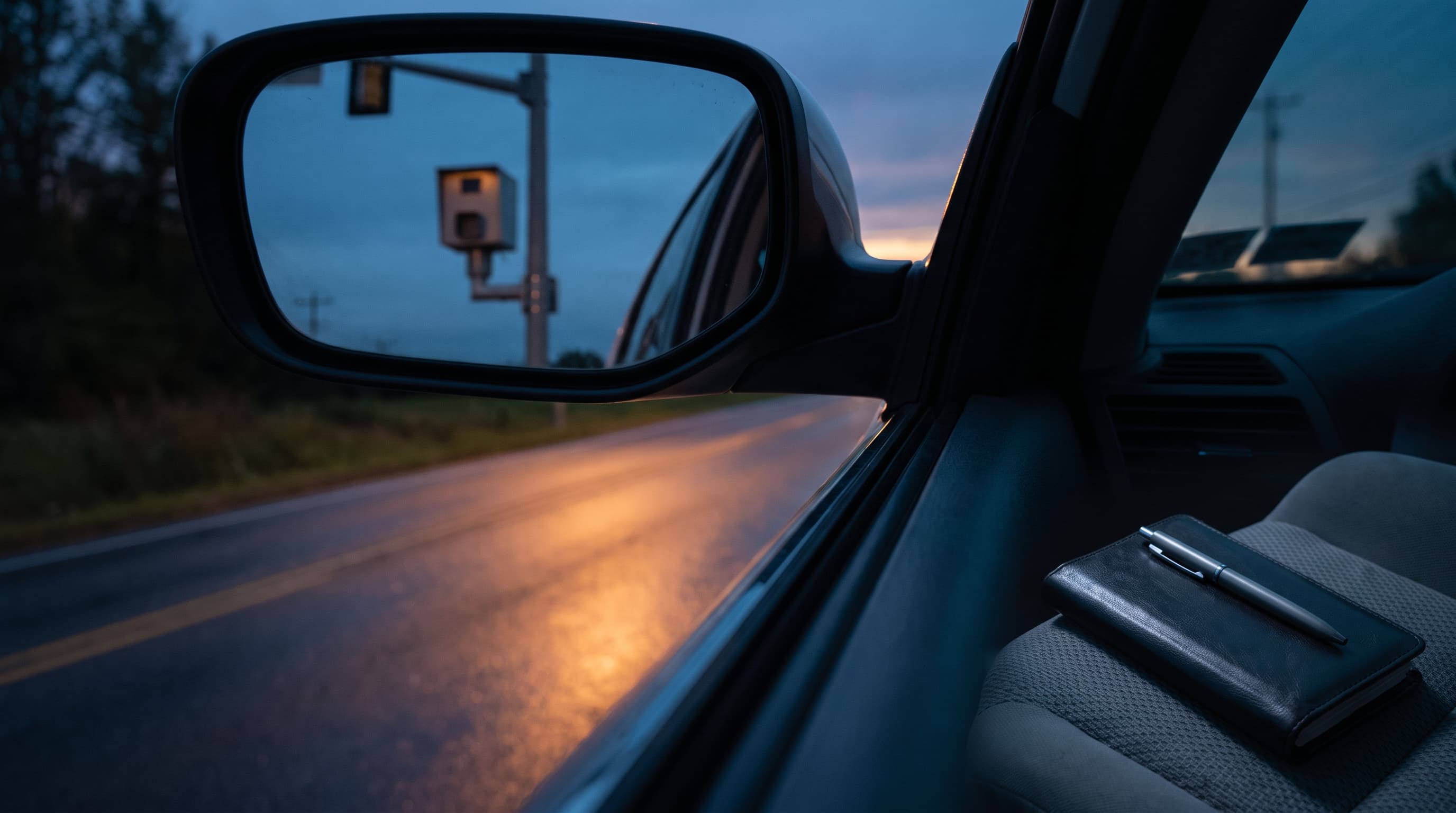
You were stopped on an ordinary road on an ordinary afternoon. The officer said something about a warrant, or your registration, or an odor. By the time you read the report, there is a line you do not recognize: a camera got a "hit" on your plate, minutes or hours before anyone pulled in behind you. That line is license plate reader evidence, and in a growing number of drug cases it is the first domino, the thing that explains why an officer was looking for your car in the first place.
This is not a small corner of policing anymore. A federal class action filed against one vendor in August 2026 describes a network of more than 120,000 cameras across 49 states. If you are facing charges that started with a traffic stop, it is worth knowing exactly what these systems produce, what courts have said about them, and what your lawyer can ask for.
What is a license plate reader hit?
An automated license plate reader, usually written ALPR or LPR in reports, is a camera that photographs passing vehicles and runs the image through optical character recognition. It produces four things: a photograph, a machine reading of the plate characters, a timestamp, and a location. The software then compares that reading against a list, called a hot list, of plates tied to warrants, stolen vehicle reports, missing persons, or an agency BOLO. When the reading matches the list, the system sends an alert to an officer's phone or terminal.
Two points matter immediately. First, the alert is a machine's guess about characters in a photograph, not a human identification. Second, the reader also stores every plate it sees whether or not it matches anything, which means the system holds a searchable travel history for cars that were never suspected of anything.
Can police stop you based on a license plate reader alone?
It depends heavily on your circuit and on one specific fact: whether the officer confirmed the plate before pulling you over.
Prosecutors typically start with Kansas v. Glover (2020), where the Supreme Court held that a plate check showing the registered owner's license is revoked supports reasonable suspicion for a stop, absent information that someone else is driving. That case is the bridge from a database record to a lawful stop. The phrase "absent information that someone else is driving" is where defense arguments live.
The harder authority for defendants is United States v. Porter, No. 25-60163, decided by the Fifth Circuit on March 17, 2026. It arose from a January 2024 stop in Gautier, Mississippi that produced a Glock switch charge. The court held two things: fixed-point, periodic ALPR reads on public roads from a limited camera network are not a Fourth Amendment search at all, and an ALPR hit tied to an outstanding warrant supplies reasonable suspicion for a stop even without any description of the driver. The court distinguished cell site location data as continuous, 24-hour surveillance versus an ALPR reading it called a snapshot at a discrete time on a public road.
The counterweight is Green v. City and County of San Francisco (9th Cir. 2014), summarized in the Brennan Center's survey of ALPR law. There, a cruiser-mounted reader returned a hit for an entirely different plate, and the court held that an unconfirmed ALPR hit does not by itself supply reasonable suspicion for an investigatory detention. That is the doctrinal home of the argument that the officer never verified what the machine said.
The plain takeaway: whether a human being read your actual plate before the stop is often the whole ballgame.
How often are license plate readers wrong?
Often enough that two 2026 government reviews produced numbers worth knowing, and they describe two completely different failure modes.
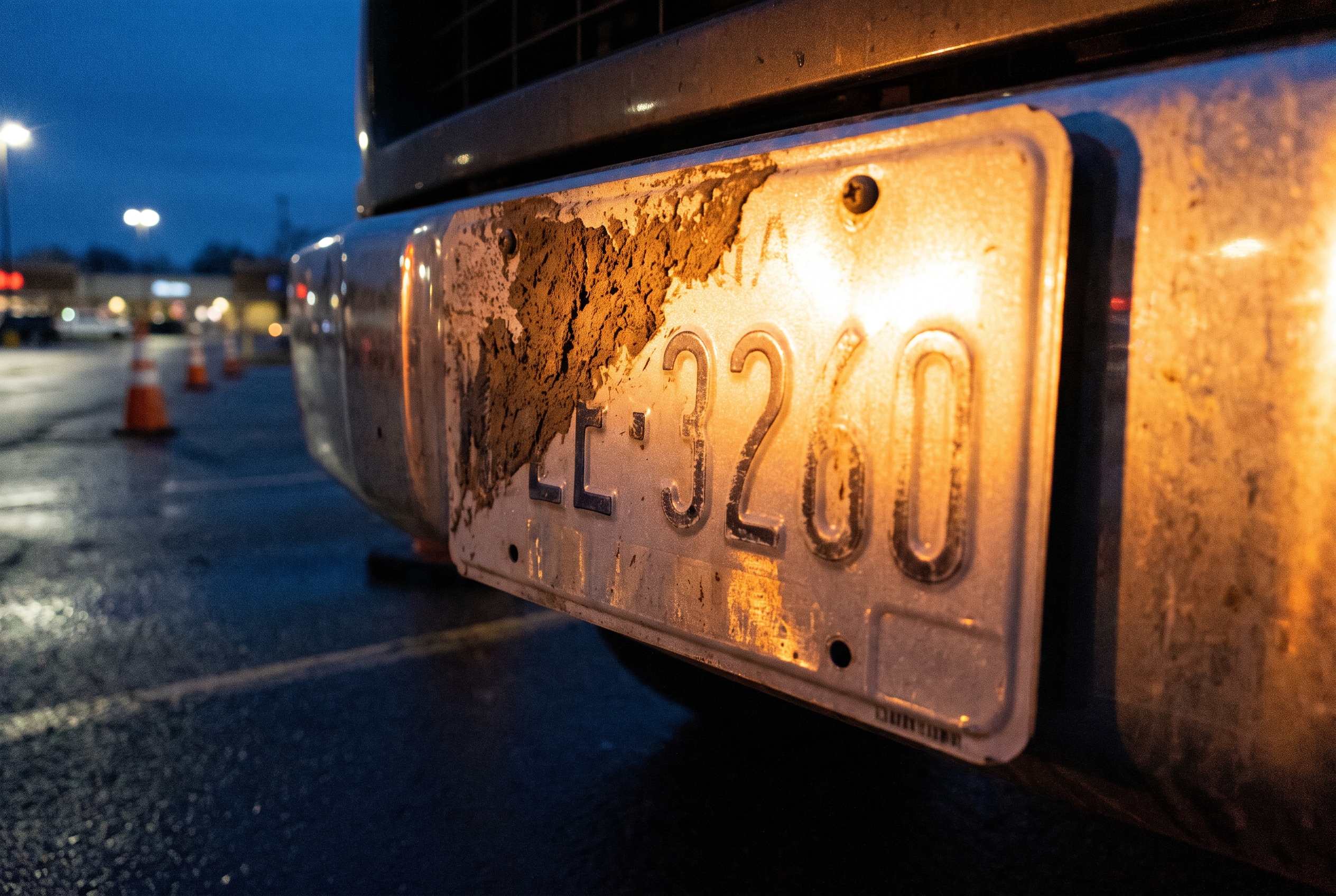
The Roseville, California police department reviewed 1,427 alerts its Flock cameras sent in 2023 and 2024 flagging vehicles as stolen or felony-linked. In 71 percent of them, the software had misread the plate. One resident was flagged at least six times because the system kept reading a 9 as an 8. Roseville says none of the bad alerts produced a stop or arrest, because officers are required to confirm the plate first. Flock attributed the rate to what it called a particularly unique deployment: rear-only capture, older hardware, and cameras mounted higher and farther from vehicles than recommended. It is worth being precise about the denominator, which this breakdown lays out: the 71 percent describes misreads within alerts, not within all plate reads.
The Los Angeles Police Department's Inspector General released a separate audit around July 10, 2026. Covering August and September 2025 across nearly 2,000 cameras, it found 161 of 498 hot-list alerts were false, roughly one in three. Here the cameras read the plates correctly. The databases were wrong: recovered vehicles never cleared, outdated theft reports, uncorrected data-entry errors. 404 Media reported on the downstream result, which was innocent people getting pulled over. LAPD's three-year Flock contract expired the next day without renewal. Redwood City, El Cerrito and Campbell also ended contracts, though California's legislature again killed an ALPR regulation bill in September 2026.
Why the distinction matters to you: a misread and a stale hot list are different defects with different discovery targets. If the camera got the characters wrong, you want the read image and the confidence score. If the camera was right and the list was wrong, you want the hot-list entry, its source agency, and the date it was last updated. A suppression motion should say which one it is.
Can police use license plate reader data in a drug case?
Yes, and the documented pattern is not about a single hit. It is about stored travel history used to build suspicion before anyone observed a violation.
In April 2025, Wisconsin deputies used Flock records to track Edward Abrams-Phillips driving to Michigan and back in a single day. The probable-cause section of the criminal complaint read, as reported from court records, "Based on prior flock hits, the vehicle travels to Michigan frequently which is a known source State for Marijuana as it is legal there." He was charged with felony bail jumping, misdemeanor THC possession, and paraphernalia. The bail-jumping count was dismissed and he was convicted only of possession.
Note the structure, because you will likely see it in your own file. The stop itself is justified on some other ground: a warrant, a registration issue, a claimed odor. The camera history does not appear as the legal basis for the stop. It appears as the narrative that explains why this car and not another one, and it does the work of making innocuous travel look like trafficking. Driving to a state where cannabis is legal is not a crime.
How do I find out if license plate reader evidence is in my case?
Read the reports for the words ALPR, LPR, Flock, hot list, hit, or BOLO. Also look for a plate-read timestamp that precedes the stop, or any account of how an officer came to be following your vehicle that does not describe an observed violation.
Then ask counsel to request these records by name. Flock's system generates several exportable trails:
-
The read itself: the captured image, the machine reading, the confidence score, the camera location, and the timestamp.
-
The hot-list entry: which list matched, which agency entered it, and when it was last updated or verified.
-
The Organization Audit: every search the agency ran on its own cameras.
-
The Network Audit: every search any outside agency ran against that agency's cameras.
-
The Event Log: logins, exports, and configuration changes.
-
The search-reason field: the free text the officer typed to justify each query.
-
The retention and deletion policy, plus the agency's ALPR use policy.
Treat the search-reason field skeptically in both directions. It is free text and largely unpoliced. Records obtained by 404 Media and EFF and summarized in this account of cannabis-travel surveillance show a Texas sheriff's deputy in May 2025 querying roughly 83,000 cameras across 6,809 networks with the reason logged as "had an abortion." A typed reason proves what someone typed, not why the search happened.
Expect friction. Some agencies take the position that the entire audit trail is an exempt investigative record.
Can I look up my own license plate?
Partly. Have I Been Flocked aggregates publicly released Flock audit logs, from FOIA releases and redacted transparency-portal postings, and lets you search your own plate. It currently reports 4,686,527 plates seen across 243,064,216 logged searches. Coverage is incomplete because few agencies publish logs, so an empty result means very little.
A hit there is a lead and a reason to move fast. It is not evidence. The admissible version comes through discovery or a public records request to the agency that ran the search. Two cautions: retention windows are short and data ages out, so a preservation demand is the urgent step, not the leisurely one; and anything you personally send to a law enforcement agency can itself become discoverable. Route this through counsel where you can.
Did the Supreme Court's Chatrie ruling change license plate reader law?
Not directly, and you should walk into a lawyer's office knowing that.
Chatrie v. United States was decided June 29, 2026, 6 to 3, in an opinion by Justice Kagan, with Gorsuch and Jackson concurring separately and Alito and Barrett dissenting. It is a geofence case about Google Location History, not a plate camera case. The Court held that accessing that stored location data is a Fourth Amendment search: a person keeps a reasonable expectation of privacy in stored location data even though a third party holds it, even if the user opted in, and even for a short window. The Court rejected the argument that pulling a narrow slice out of a larger database escapes the Fourth Amendment.
What it did not do matters just as much. As the Congressional Research Service analysis and practitioner summaries both note, the Court did not decide whether the warrant in that case was valid, what probable cause showing is required, or whether the good-faith exception applies. Those questions went back to the Fourth Circuit. Chatrie invalidates no camera network. Its value to a defendant is analogical: retrospective location history, held by a private vendor, searched without a warrant. That is the argument defense counsel are now running against warrantless plate-camera histories, and it has to get past Porter's snapshot reasoning to win.
Where is the license plate reader fight actually happening?
The case to watch is Schmidt v. City of Norfolk, an Institute for Justice suit over Norfolk, Virginia's 176-camera Flock network, filed in October 2024 in the Eastern District of Virginia. Chief Judge Mark S. Davis ruled for the city on January 27, 2026, finding the network not extensive enough to amount to an unconstitutional search, while warning that ALPR surveillance "could become too intrusive" as it expands. The residents appealed to the Fourth Circuit, No. 26-1227. The ACLU, ACLU of Virginia and EFF filed an amicus brief on April 20, 2026, with Cato and NCLA also briefing and sixteen states plus the District of Columbia supporting Norfolk.
That is the live vehicle for the mosaic theory: the idea that a dense enough network crosses the line from snapshot to sustained surveillance. It is unresolved, and the answer is circuit-dependent.
Does state law limit license plate reader use?
Sometimes, and this is frequently the shorter path. A statutory violation can support a suppression or exclusion argument without winning a constitutional question first.
Virginia's HB 2724, with most provisions effective July 1, 2025, limits ALPR use to criminal investigations, missing or endangered persons, outstanding warrants, and stolen vehicles or plates, and caps retention. The state Crime Commission's fact sheet sets out the permitted purposes, and this legislative history traces the fight over a 21-day versus 30-day window, with deletion required absent an ongoing investigation or prosecution. California's SB 34 governs ALPR data handling and sharing.
Ask two questions of your own state's statute: was the purpose of this search one the law permits, and was the data still lawfully retained when it was searched?
What about the lawsuits against Flock?
They are real, and they are in a different lane from your case. Schulte v. Flock Group Inc. was filed August 25, 2026 in the Northern District of Georgia, by a Georgia resident, raising invasion of privacy, negligence, negligent design, failure to warn, and intentional infliction of emotional distress, on behalf of a proposed nationwide class covering everyone whose plate data was collected since January 1, 2024. The complaint cites reporting that at least 50 officers nationwide were charged with or accused of misusing ALPR systems, 46 involving Flock, and alleges one Richmond County deputy ran 1,639 unauthorized searches on a single woman. A separate California class action is built on SB 34.
These suits seek privacy damages. They will not dismiss your charges. They can still matter to you as cross-examination material, because a documented pattern of misuse is relevant to whether a particular search in a particular case was what the report says it was.
What to do this week
-
Ask your lawyer directly whether an ALPR alert or plate-history search generated the stop, and ask them to confirm it from the reports rather than from the officer's summary.
-
Ask for the audit logs by name: Organization Audit, Network Audit, Event Log, plus the read image, confidence score, and hot-list entry with its source agency and last-updated date.
-
Send a preservation demand now. Retention windows in some states are measured in weeks.
-
Find out whether anyone visually verified the plate before the stop. Under Green, an unconfirmed hit standing alone does not justify a detention.
-
Read your state's ALPR statute for permitted purposes and retention limits, and compare them to what the records show actually happened.
None of this guarantees an outcome. Under Porter, a plate hit tied to a warrant can carry a stop on its own in the Fifth Circuit, and Chatrie did not change that. But a case that began with a camera leaves a paper trail, and that trail is one of the few places where a defendant can check the government's account against a machine's own logs.

Related reading
Sources
-
Georgian files federal class-action lawsuit against Flock Safety (WRDW)
-
California Town Says Flock Cameras Misread License Plates 71% Of The Time (Techdirt)
-
Flock's 71% Problem: What the License Plate Accuracy Numbers Really Mean
-
LAPD Cuts Off Flock Safety After Audit Finds One-in-Three Hot-List Alerts Were False (TechTimes)
-
California kills bill regulating Flock cameras even as public rage grows (CalMatters)
-
Chatrie v. United States, No. 25-112 (U.S. June 29, 2026), slip opinion
-
Plate Readers and Plain View: The Fifth Circuit's ALPR Analysis in United States v. Porter
-
Automatic License Plate Readers: Legal Status and Policy Recommendations (Brennan Center)
-
Flock Cameras and Cannabis: Police Are Tracking Trips to Legal Weed States (High Times)
-
What's in the Audit Logs: How to Read a Flock Search Trail (DeFlock ILM)
-
Judge Rules Lawsuit Challenging Norfolk's Use of Flock Cameras Can Proceed (Institute for Justice)
-
Judge holds Norfolk's license plate reader use constitutional (Courthouse News Service)
-
Automatic License Plate Recognition (HB 2724) Fact Sheet (Virginia State Crime Commission)
-
Automated License Plate Readers in Virginia (Richmond Journal of Law and Technology)
Note: This article contains AI-assisted content and has been reviewed by our editorial team.
IMPORTANT NOTICE: GavelDaily.com is an advertising and information service, not a law firm. Submitting this form does not create an attorney-client relationship. The information you provide will be shared with licensed criminal defense attorneys in your area who may contact you about your inquiry. All submissions are treated as confidential by our service, but attorney-client privilege does not attach until you formally retain an attorney. Any attorney you connect with through this service is independently responsible for their legal advice and representation. Free consultations are subject to individual attorney availability. If you are facing an immediate legal emergency, contact your local public defender's office or call 911.