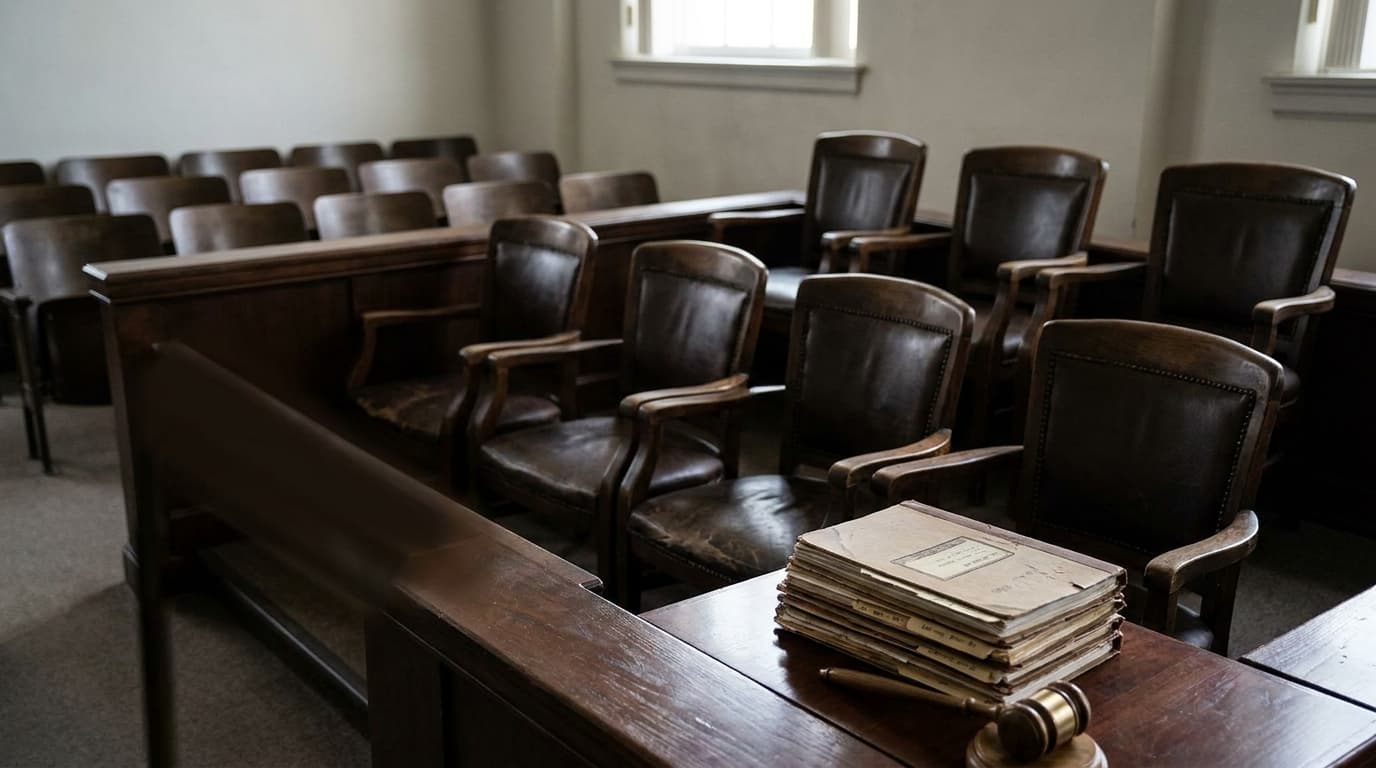
On June 15, 2026, the Supreme Court agreed to answer a question most defendants assume was settled generations ago: how many people does it take to convict you of a felony? In Kian v. Florida, No. 25-6623, the justices granted certiorari to decide whether the Sixth and Fourteenth Amendments require a 12-person jury when the government charges someone with a serious offense. The case will be argued in the October 2026 Term, with arguments this fall.
The vehicle is unglamorous. Hamed Kian, a Jupiter, Florida chiropractor in his mid-40s, was convicted by a six-person jury of five counts of practicing chiropractic medicine on a suspended license. He was sentenced to one year and one day in prison on three of the counts and five years' probation on the other two. There is no dramatic crime here. What makes the case matter is the number in the jury box, and the fact that Kian is asking the Court to overrule a decision that has stood since 1970.
The precedent in the crosshairs: Williams v. Florida
For more than five decades, the controlling authority has been Williams v. Florida, 399 U.S. 78 (1970). In that case the Court held, 7-1, that a six-person jury does not violate the Sixth Amendment. The reasoning was functional. The majority concluded there was no discernible difference in outcomes between a jury of six and a jury of twelve, so it treated the historical number as a legal accident rather than a constitutional command.
That cost-benefit style of reasoning is exactly what Kian is attacking. His argument, laid out in his petition for certiorari, is that Williams was incorrectly decided and that later Sixth Amendment law has knocked the legs out from under it.
Why Ramos changed the ground
The change came in Ramos v. Louisiana, 590 U.S. 83 (2020), which struck down non-unanimous jury verdicts. The important part for Kian is not the unanimity holding itself but the method the Court used to get there. Ramos rejected the functional, results-focused balancing that Williams relied on and instead grounded the jury right in its original meaning at the Founding.
Kian's position is straightforward: if the Court now reads the Sixth Amendment through its original meaning, and if a jury at the Founding meant twelve people, then the functional rationale that saved six-person juries in Williams no longer holds. The state of Florida disputes this and defends both Williams and its own practice in its brief in opposition. For an originalist take on why the jury-size question is live, see this analysis from Reason.
Which states this actually touches
This is a state-court story, not a federal one. Under Federal Rule of Criminal Procedure 23(b), federal criminal trials already require 12 jurors, so a defendant win would not change federal jury practice. The doctrinal driver is federal constitutional law, but the practical fallout lands on state systems.
According to coverage from The Washington Times and WUWF (NPR), six states still permit sub-12 juries in at least some non-capital criminal cases: Florida, Arizona, Connecticut, Indiana, Massachusetts, and Utah. Florida's six-person felony jury for non-capital cases traces back to a Jim Crow-era statute, a history explored in this piece from The New Republic. In each of these states, a ruling for Kian would force a change in how serious cases are tried.
Pending trials: what happens mid-stream
If you are facing a serious charge in one of those six states while the case is pending before the Court, the constitutional question is no longer academic. Defense lawyers have concrete moves to make. The most direct is to move to empanel a 12-person jury and, when that motion is denied, to preserve the objection cleanly on the record. Preservation matters because a defendant who fails to raise and protect the issue may forfeit the benefit of a favorable ruling later.
There is also the question of timing. Some defendants may seek stays or continuances to avoid being tried by a six-person jury while the rule is in doubt. Prosecutors face their own calculus. Charging decisions and trial scheduling now carry a risk that did not exist a year ago: a conviction obtained by a six-person jury this fall could be exposed if the Court sides with Kian.
Plea leverage shifts
A live constitutional cloud over six-person verdicts changes the math at the bargaining table. For the defense, there is a new reason to preserve the jury-size claim and to weigh the value of a preserved issue against the certainty a plea provides. A defendant who pleads guilty generally gives up the ability to litigate the point later, so the decision to plead now looks different than it did before the cert grant.
For prosecutors, the risk runs the other way. A verdict won in front of six jurors could be reversed if the Court changes the rule, which raises the cost of taking a marginal case to trial and can push the state toward resolving cases by plea. None of this predicts an outcome. It simply reflects that uncertainty itself has bargaining value.
The retroactivity wall: Edwards v. Vannoy
The hardest question for anyone already convicted is retroactivity, and here the road is steep. In Edwards v. Vannoy, 593 U.S. 255 (2021), the Court held 6-3 that Ramos does not apply retroactively on federal collateral review, and it declared the old Teague "watershed" exception moribund. You can read the slip opinion or a plain-language summary from Justia.
The practical meaning is blunt. Even if Kian wins, Edwards stands as a major obstacle to any wave of collateral relief for closed cases in the federal system. A defendant win would most clearly help future trials and cases still moving through direct appeal, far more than convictions that are already final. There may be state-law retroactivity avenues that diverge from the federal Teague framework, and those would be litigated state by state, but the federal collateral door is largely the one Edwards described. Recent reporting from the Jefferson City News-Tribune frames just how consequential this would be for the volume of Florida convictions in question.
Remedy and scope: the questions left open
Even a defendant victory would leave large questions for later. One is the remedy. If a six-person jury is unconstitutional for serious offenses, is a conviction automatically reversed, or does the Court treat the defect through a harmless-error or structural-error analysis? That distinction can decide whether affected defendants get new trials or nothing at all.
Another is the boundary of the ruling. Jury size and jury unanimity are related but distinct issues, and the Court could draw lines between them. It is also entirely possible the justices rule on narrow, fact-bound grounds, or reaffirm Williams outright. As the SCOTUSblog explainer notes, the outcome is genuinely open. Retroactivity and remedy would likely be left to follow-on litigation no matter which way the merits come out.
What to watch this fall
The docket moved quickly. The petition was filed January 9, 2026; Florida initially waived its response on January 26; the Court requested a response on February 18; the brief in opposition arrived around April 20; and certiorari was granted June 15 out of the June 11 conference. Argument comes in the October 2026 Term.
Between now and the decision, three things are worth tracking. First, the argument itself and the questions the justices press. Second, the amicus alignment, which is likely to feature originalist scholars, the affected states, and the defense bar pulling in different directions. Third, and most important for anyone with a case on the line, the difference between a broad overruling of Williams and a narrow ruling tied to Kian's specific facts. That gap will determine whether this decision reshapes criminal trials across six states or resolves one chiropractor's appeal and little more.
Related reading
-
[The Sentencing Credit for Fixing Your Life Before Sentencing: The Commission Floated It, Then Left It Out of the November 1 Rules](/article/section-3e1-2-post-offense-rehabilitation-proposed-not-adopted-2026)
-
Pennsylvania Just Invented a New DUI Crime That Turns Your Old ARD Into a Prior Offense
-
[The Hemp Gummy in Your Cabinet Becomes a Schedule I Drug on November 12: The Federal Ban That Recriminalizes Most of the Market](/article/hemp-gummy-schedule-i-november-12-federal-ban)
Sources
-
Supreme Court will decide whether criminal cases must have 12 jurors — WUWF (NPR)
-
Supreme Court to review Florida's use of a six-person jury — The Washington Times
-
Supreme Court could end six-person juries — Jefferson City News-Tribune
-
The Supreme Court Might Fix Something for Once — The New Republic
Note: This article contains AI-assisted content and has been reviewed by our editorial team.
IMPORTANT NOTICE: GavelDaily.com is an advertising and information service, not a law firm. Submitting this form does not create an attorney-client relationship. The information you provide will be shared with licensed criminal defense attorneys in your area who may contact you about your inquiry. All submissions are treated as confidential by our service, but attorney-client privilege does not attach until you formally retain an attorney. Any attorney you connect with through this service is independently responsible for their legal advice and representation. Free consultations are subject to individual attorney availability. If you are facing an immediate legal emergency, contact your local public defender's office or call 911.